
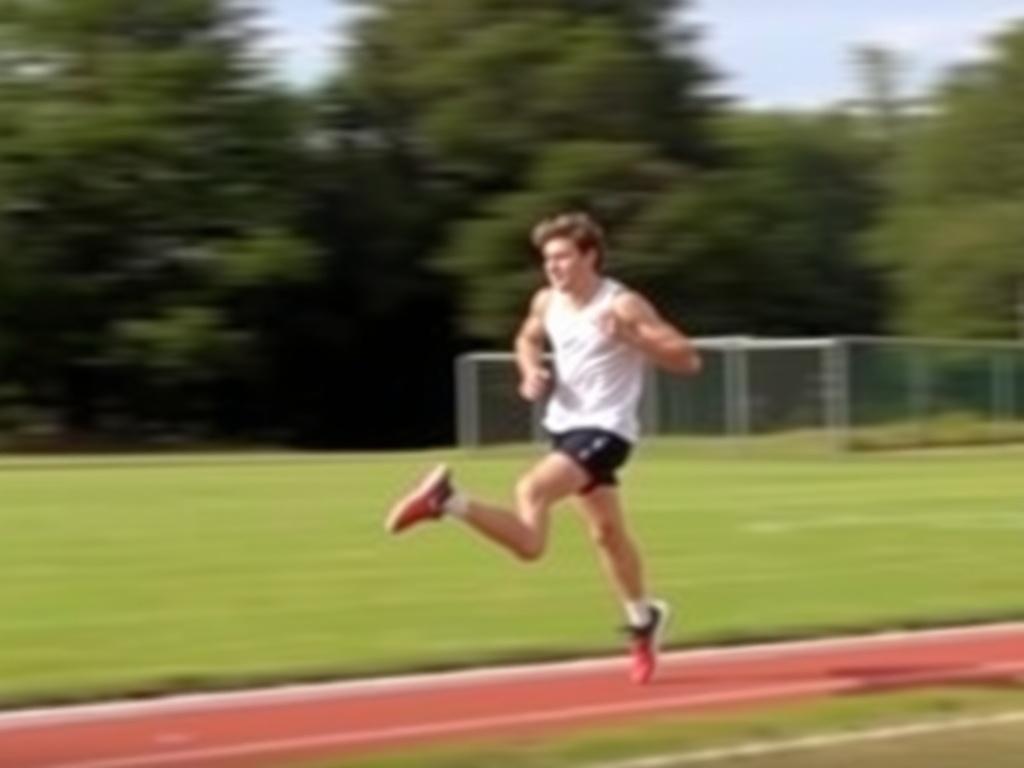
Short-distance running has a way of punching above its weight. It demands precision, explosive power, and a sharpened sense of timing all in one breath. If you’ve ever watched a 60- or 100-meter dash and felt the air crackle with energy, you know what I’m talking about. This article dives into the core ideas that separate good sprinters from great ones, blending technique with race-day strategy. For Russian-speaking athletes and coaches, the phrase Бег на короткие дистанции: техника и тактика signals a focused blend of form and plan that can be learned, practiced, and refined. We’ll treat that phrase as a compass, not a slogan, guiding us toward practical, repeatable gains.
What defines short-distance racing
In the world of track and field, short distances cut straight to essential questions: How quickly can you generate speed, and how efficiently can you carry it over a few seconds or a few tens of meters? Power, neural efficiency, and flawless technique all play out in a compact window. Unlike longer sprints where endurance matters more, the short sprint rewards reaction time, projectable acceleration, and the control you have over your body in the first strides after the start.
To athletes stepping onto the track, these races feel like a single gust of force—an instant where gravity and momentum meet. The goal isn’t just to run fast but to do so with minimal wasted movement. Misreads—lifted shoulders that slow the arm swing, a staggered weight shift that delays foot contact, or breathing that tugs the chest closed—can erase hundredths in a heartbeat. Understanding what defines the discipline helps you align your training, your starts, and your race plan with reality rather than with guesswork.
Biomechanics of speed
Speed in short-distance events arises from a finely tuned interplay of posture, ground contact, and the sequence of force production. The body becomes a compact engine: feet plant cleanly, hips drive forward, arms slice past the torso in a controlled rhythm, and the eyes stay focused on the lane line. The simplest way to begin is by mapping the three critical phases: reaction and start, acceleration, and top-end speed. Each phase has distinct demands, but they blend into one continuous surge when executed well.
When athletes talk about the mechanics that matter most, they often mention cadence, step length, and how the body reduces wasted travel time. Cadence, or the rate of steps per second, increases as you accelerate, but it should never outrun your ability to land softly and re-accelerate. Step length should expand with control, not with a loss of balance. Ground contact time shortens as you move from a slow, powerful push to the point where your foot barely leaves the ground before you push again. These micro-adjustments accumulate into decisive milliseconds that separate champions from contenders.
Sprint mechanics basics
Start with a stable, athletic position. Knees slightly bent, hips a touch above the shoulders, and the head neutral. The goal is a compact, explosive first step that pushes you forward rather than up. A clean start sets the tone for the entire race because early drive multiplies the distance you have to cover before top speed is reached. A common fault here is lifting the head or over-rotating the shoulders, which shifts weight and lengthens the time to reach full acceleration.
As you lengthen into acceleration, your shin angles, ankle stiffness, and knee drive must align with a forward-travel vector. The foot should strike under the center of gravity, not in front of it, so you don’t brake yourself with excessive braking forces. Arm action mirrors your leg drive: elbows at roughly 90 degrees, hands relaxed, and the swing coordinated with the opposite leg. A synchronized tempo prevents energy leaks and keeps your body moving in a straight line toward the finish line.
Acceleration zone and max velocity
In short sprints, the acceleration phase typically lasts the first 25 to 40 meters, depending on the athlete and the event. The aim is to reach top speed as quickly as possible while maintaining form. Short, sharp firings of power through the legs—think of it as repeatedly pressing a reset button on your speed—help you climb to your maximum velocity efficiently. A common misstep is trying to smash power too early and losing form; gradual, disciplined acceleration often yields bigger returns than raw force alone.
Max velocity, once achieved, is a brief plateau where you must maintain technique under fatigue. The key is maintaining a compact posture: hips forward, chest open, and a stable head position. Arm action remains crucial here, acting as the counterbalance for the legs. Even at top speed, a tiny misalignment can cause a ripple effect that saps speed in the final meters. Training should simulate this tight, controlled rhythm so the body trusts the pace when the race is on the line.
| Phase | Typical duration | Key focus |
|---|---|---|
| Reaction and start | 0–0.25 s | Explosive movement, optimal block exit |
| Acceleration | 0.25–2.0 s | Increase speed with good form |
| Top speed | 2.0–4.0 s | Maintain velocity, minimize deceleration |
TTechnique basics: starting, sprint mechanics, acceleration
Technique in the sprint isn’t a ritual cure; it’s a practical framework you can trust when nerves spike and the clock starts counting. The best sprinters treat technique as a series of repeatable actions, not a series of dramatic gestures. Consistency builds confidence, and confidence compounds your speed as you carry more of your raw power into competitive moments.
In practice, you’ll cycle through drills that reinforce a clean start, efficient acceleration, and smooth maintenance of speed. The drills shouldn’t feel esoteric or theatrical; they should feel like the natural expression of your body’s capabilities. The more you practice, the more your body internalizes each signal, making split-second decisions automatic rather than conscious calculations.
Starts and reaction time
The start is the most scrutinized moment in a short race, but it’s also the moment you can gain a tangible edge. A strong start requires fast optical processing—the anticipation of the gun—and a body that can translate that cue into immediate force. Practically, that means a well-timed drive off the blocks, a vertical force vector that quickly transitions into forward propulsion, and a sequence where the hips push the knees forward in a compact arc.
Reaction time is partly psychological and partly biomechanical. You can train it with cue-based drills and block work that simulate competition conditions. The goal isn’t to become emotionally flawless but to create a reliable template your nervous system recognizes under pressure. Even tiny improvements in this area can add up over the length of a season, especially in races where hundredths separate finalists from spectators.
Stride length and frequency
Stride length and stride frequency form the heartbeat of sprint speed. You want enough length to cover ground without breaking rhythm or overstriding, which invites braking forces. Simultaneously, cadence should rise as you accelerate, but not so fast that you lose control or land hard. A balanced mix—fast leg turnover paired with efficient contact—produces forward momentum without wasted movement.
Coaching conversations often focus on the “sweet spot” of stride metrics for each athlete. There’s no universal recipe because body proportions, strength, and mechanics vary. The art lies in discovering your own ideal combination through mindful drills, video feedback, and progressive loading that strengthens both speed and stability.
Breathing and relaxation
Breathing might seem secondary in a sport defined by power, but it quietly governs how long you can stay in peak effort. Tension in the upper body robs efficiency; relaxed shoulders and a controlled breath pattern help you preserve velocity. In the blink of a race’s rhythm, a deep, calm inhale followed by a controlled exhale can stabilize the torso and keep the arm swing moving freely.
Training with breath control—drills that couple breathing patterns to stride cycles—helps sprinters respond better to the stress of competition. Remember, sprinting requires a balance between intensity and control. When you maintain that balance, your body can deliver clean, repeatable acceleration and a sustainable push through the final meters.
Tactics for racing short distances
Technique wins races, but tactics decide who crosses first. In short sprints, strategy is less about outsmarting an opponent and more about maximizing your own potential in a tightly constrained frame. It’s about when to surge, how to respond to a rival’s move, and how to protect your form when fatigue begins to bite. The best tactics are practical, science-informed, and tailored to your strengths.
Understanding race dynamics is especially valuable in the 60–200 meter range, where the margin for error is tiny and the window for decision-making is brief. You’ll see differences from meet to meet, but the underlying principles stay consistent: harness your start, optimize your acceleration, and manage the last push to the line with as much control as possible. The phrase Бег на короткие дистанции: техника и тактика takes on life here, reminding you that both form and plan matter as you chase fast times.
Race planning for 60m to 200m
In these distances, your race plan often centers on a precise initiation, a controlled build of speed, and a fearless finish. Some athletes prefer a more aggressive early phase, while others ride a smoother acceleration all the way to the finish. The key is to know your body well enough to choose a plan you can execute under pressure, not merely one that sounds impressive in practice.
One practical approach is to visualize the race in three blocks: the first 20 meters for a clean breakout, the next 40 meters for decisive acceleration, and the final 20 meters for a sustained push. This framework helps you allocate effort intelligently. It also makes it easier to communicate strategies with coaches and teammates who can provide targeted feedback on starts and transitions.
Starting blocks and readiness cues
Blocks matter because they set your orientation for the entire sprint. A stable base, tight ankles, and neutral hips create a launchpad for rapid departure. Readiness cues on race day include a dry mouth, a slightly elevated heart rate, and a focused gaze ahead. Those signals aren’t distractions; they’re parts of an integrated routine that tells your nervous system you’re ready to explode forward.
Coaches often emphasize rehearsal under realistic conditions: identical blocks, the same surface, and the same mental cues you’ll use in competition. Familiarity reduces hesitation when the gun goes off. If you’re working with a partner or coach, include reaction-time blocks that mimic the unpredictability of a real race, so you stay sharp when the moment actually arrives.
Training blocks and conditioning
Short-distance runners require a blend of raw power, technical efficiency, and robust recovery. Periodization helps you structure the year so you peak at the right moments while avoiding burnout. A well-balanced program alternates heavy sprint work with lighter technique sessions, ensuring you develop neuromuscular readiness without sacrificing form.
Strength training remains a non-negotiable pillar, but it should be targeted. Focus on explosive power—plyometrics, Olympic lifts, and quick jumps—that translate into faster ground contact. Pair those sessions with sprint-specific drills that reinforce posture, arm action, and leg drive. The endgame is a body that can reproduce high-speed movement repeatedly, not just in isolated efforts in the gym or on the track.
Drills and workouts for speed development
Sprinters benefit from a mixture of ballistic drills, acceleration work, and short-speed repetitions. A typical week might include two to three sprint sessions, one lighter technique day, and a dedicated strength block. Drills such as A-skips, B-skips, and fast-poly steps cultivate proper mechanics without overloading the nervous system. Short, intense repeats train the body to recover quickly between efforts, mirroring the demands of a short race.
Workouts should remain purposeful and progressive. For example, a block session could start with reaction-time practice, then move into 3–4 x 20–40 meters at near-max speed, with ample rest. A separate session might emphasize maximal acceleration with 4–6 x 15 meters from a standing start, focusing on ground contact and hip drive. The aim is to stack high-quality reps that teach the body how to move fast with reliability.
Injury prevention and recovery
Sprinters are repeatedly asking their bodies to produce power in very short bursts, which can stress the joints and connective tissues. A thoughtful approach to injury prevention combines technique refinement, mobility work, and prudent rest. Prioritize soft landings, balanced hip mobility, and ankle stability because these areas often bear the brunt of sprinting forces.
Recovery is more than rest. It’s a structured process that includes nutrition, sleep, and active maintenance. Gentle conditioning on off days—like light cycling or elliptical work, plus mobility sessions—helps keep the body adaptable and less prone to overuse injuries. Track athletes who respect recovery reap more consistent improvements over a season than those who push through fatigue without a plan.
Equipment and environment
The right gear makes a noticeable difference, especially in short races where marginal gains add up quickly. Shoes should offer a balance of lightweight stiffness for propulsion and adequate grip for explosive starts. A comfortable, non-restrictive uniform keeps your body moving fluidly, and proper eye protection or contact lenses can prevent misreads during the moment of ignition.
Environment matters, too. Track conditions, wind, and temperature all shape how you run. On cooler days, a warm-up becomes even more critical to convert stiffness into elasticity. If the track is slick or the wind is biting, a slightly altered start and a steadier pace may be necessary to maintain form and avoid early fatigue.
Real-life stories and author experience
I’ve watched dozens of sprinters from early adolescence to late college years, and the truth is simple: talent only carries you so far. The athletes who stand out practice with intention, decompose their races into small, measurable parts, and then train those parts with visible, trackable progress. One runner I coached found that her best 60-meter races came after a week of deliberately slower, technique-focused days that allowed her nervous system to consolidate the speed she generated on the track. The result wasn’t flashy, but it was repeatable—a reminder that consistency beats intensity when intensity isn’t controlled.
Another athlete—an athlete who loved the challenge of Бег на короткие дистанции: техника и тактика—learned to switch from a purely powerful approach to a more nuanced rhythm in the last 20 meters. It wasn’t a dramatic change, but the effect was unmistakable: smoother deceleration, cleaner breathing, and a finish that didn’t collapse under fatigue. Real progress in short sprints rarely comes from a single breakthrough; it comes from accumulating small, reliable improvements in technique, planning, and recovery.
Putting it all together
Great short-distance runners understand their own bodies and respect the clock. They practice the exact movements that matter in competition, tune their starts to shave off milliseconds, and keep their technique sharp even when fatigue approaches. They know that speed is a product of form and plan working in harmony, not a single heroic moment in isolation. If Бег на короткие дистанции: техника и тактика is the compass, then consistent, honest training is the map that leads you to faster times and smarter performances.
In practical terms, that means you should adopt a simple, repeatable template for practice days, then adapt it for meets. Start with a reliable block work routine, follow with acceleration drills, and end with race-pace or near-max sprints that push your ability to sustain form. Monitor your progress with short video analyses and keep a log of how your body feels after each session. Speed isn’t just about raw power—it’s a conversation between your nervous system, your muscles, and the track you stand on. Heed the conversation, and the finish line will greet you as a friend, not a mystery.