
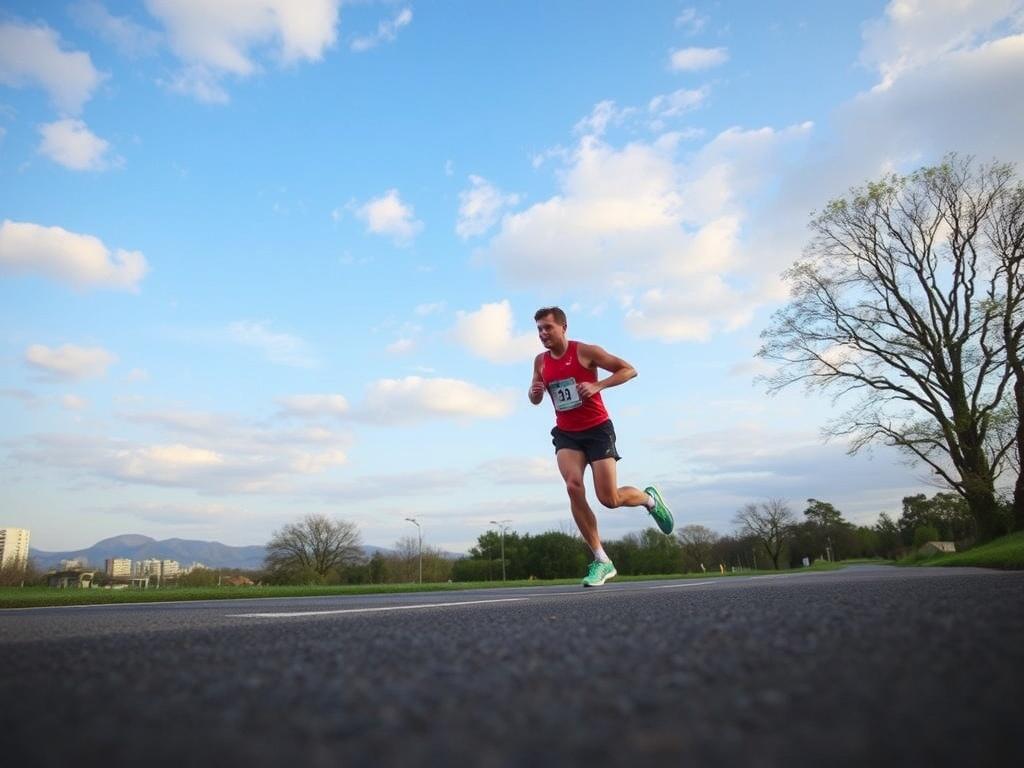
Middle-distance running sits at a strange crossroads, where speed meets stamina and momentum collides with strategy. It isn’t enough to be fast in a straight line or tough in a longer run; you have to read the track, manage effort, and execute a plan that accounts for variables you can’t control. This article walks you through the essentials—how to pace, how to position yourself, and how to finish with intent—so you can turn training into wins on race day.
Understanding what middle distance means on the track
Most athletes consider events around 800 to 3000 meters as middle distance, with the 1500 meters often serving as the ultimate test of symmetry between speed and endurance. The key is that you must sustain a high percentage of your peak speed for far longer than a sprint but not so long that you lose your finishing kick. This balancing act defines the training philosophy and the race-day decisions you face on the curve of the track.
At its core, middle-distance racing is a problem of energy systems. You rely on anaerobic bursts for acceleration and closing kicks, while your aerobic system carries you through the middle of the race and helps you recover between surges. Training must reflect that dual duty: you need fast-twitch power, efficient lactate clearance, and a pace you can hold under pressure. The result is a race plan that feels both precise and responsive, because you’re not just running a fixed script—you’re playing a dynamic game of tempo, positioning, and timing.
Pacing as the backbone of strategy
Pacing is less a single decision and more a stream of micro-choices. Do you sit with the process or test the field early? Do you react to a surge, or do you own your rhythm? The most successful middle-distance runners master a few pacing templates and learn when to deviate. In practice, this means committing to a target pace for a given segment, then adjusting based on what unfolds in front of you.
Even splits work well for many races, but the realities of the track—crowding on the first 200 meters, the wings of the curve, wind at your back or into your face—mean you’ll often shoot for a controlled start, a strong middle, and a purposeful finish. A well-taught plan uses a slight negative split or a resilient last 300 meters, not a reckless dash from the gun. The goal is to arrive at the final lap with your options open, not empty of energy or confidence.
Pacing strategies for different middle-distance events
1) The 800 meters asks for aggressive control. The winner often drives through the first 400 meters with precision, then uses a strong last 200 meters to seal the race. If you start too fast, you pay in the final bend; if you go too slow, you lose contact with the leaders. The middle ground is a compact, consistent rhythm that preserves a competitive kick.
2) The 1500 meters rewards patience and timing. Runners who stay near the front early tend to dodge chaos and use the final bend to unleash a well-timed surge. Others choose to conserve a little energy behind the leaders, then accelerate as the pace tightens. Either approach works as long as you manage your effort and read the race’s tempo.
3) The 3000 meters tests endurance and nerve. Even pacing can work, but so can a controlled buildup followed by a late, decisive push. The trick is staying relaxed in the early laps, maintaining form under fatigue, and knowing when to move. In this distance, strategic positioning becomes a powerful weapon, and your ability to pace conservatively early pays dividends when the field thins and the track opens up for a sustained finish.
Training blocks that reinforce the strategy
Training for middle distance is a blend of fast work, steady effort, and recovery that supports both speed and endurance. A well-rounded plan includes tempo runs, interval sessions, strength work, and race-pace practice designed to convert theoretical pacing into feel under fatigue. The objective is not only to run fast but to run fast at the right times, with a body that is efficient, not burning unnecessary energy.
Your weekly plan should respect a balance between hard days and easy days. A typical block might feature two quality sessions (one easier, one faster), two to three aerobic sessions, and a couple of lighter days to solidify technique and mental readiness. Rest is not optional; it’s part of the process that allows the nervous system to adapt and the muscles to repair.
Tempo runs and lactate management
Tempo runs train you to hold a tough, sustainable effort for 15 to 30 minutes, depending on the distance. They improve lactate threshold and teach your body to clear metabolic byproducts efficiently. Inside tempo workouts, you learn to settle into a pace that feels “hard but doable,” a sweet spot you’ll replicate on race day when fatigue threatens to creep in.
As you progress, tempo sessions should become more nuanced—shorter, sharper tempos at slightly faster speeds, and longer tempos at a steady, controlled cadence. The aim is to push the ceiling without wrecking the engine, so you can lean into the last lap with confidence rather than fear.
Intervals that mimic race demands
Intervals provide speed endurance and tolerance for discomfort. The exact scheme depends on the distance, but a common thread is variability—shorter recoveries for speed, longer recoveries for stamina. For 800-1500 meters, you’ll often see repetitions that require you to surge, then recover just enough to maintain form into the next rep. These sessions teach your legs to stay efficient under repeated stress.
In practice, you might alternate hard 400-meter repeats with full recoveries, or run 600-meter repeats at a pace just above race-pace, with restorative jogs in between. The critical piece is maintaining technique under fatigue. If you start to flail, you’ve trained too hard or too fast for your current phase.
Technique and form under pressure
Economy of motion becomes crucial when fatigue builds. Arm carriage, breathing rhythm, and cadence all influence how well you carry speed across the last meters of a race. Small adjustments—soft hands, compact shoulders, a relaxed jaw, and a smooth turnover—compound into meaningful gains when the race tightens.
Drafting can save energy, especially in the 1500 and 3000 meters. Stay light on your feet, ride a specific lane if you’re in a crowded pack, and be prepared to switch position as the field unfolds. The best runners aren’t just fast; they are tactically awake—reading the moves of the competitors and responding with intent rather than impulse.
Race-day essentials: warm-up, fuel, and readiness
A clean, consistent routine sets the stage for a strong performance. A well-designed warm-up elevates heart rate, primes neuromuscular recruitment, and tunes your mind for the demands ahead. Include light jogs, dynamic drills, mobility work, and a few short accelerations to connect your body to the pace you intend to hit on the first lap.
Nutrition and hydration are practical levers you can pull without heroic measures. A light meal 2–3 hours before racing, plus a small boost of quick energy if you’re running late, can prevent early fatigue. During the race, you won’t rely on a full meal; you’ll lean on your established glycogen stores and the steady delivery of oxygen to your working muscles, aided by a confident breathing rhythm.
The mental game: staying composed and making smart moves
Mindset matters as much as muscle. In a middle-distance race, nerves will surface—surges, crowd noise, and the occasional misstep by a rival. Your job is to stay calm, maintain a clear plan, and be ready to switch tactics as needed. Visualization, prerecorded race splits, and a routine cue to reset during the pace changes can keep you grounded when the track becomes loud and the clock starts talking back to you.
Realistic expectations are essential. Enter each race with a plan, but also a readiness to adapt. If you miss your ideal position, focus on repairing your path rather than lamenting what could have been. A flexible, confident runner can ride momentum without losing their nerve, turning small openings into opportunities to move into the optimal lane or to surge with clean technique.
Common mistakes and how to avoid them
The most frequent trap is starting too fast. A bold opening can backfire as the fatigue compounds through the middle and late stages. Another pitfall is overemphasizing speed at the expense of economy; you can be fast, but if your form collapses when the pace rises, you’ve lost efficiency and energy for the finish. Finally, neglecting the plan for recovery and adaptation reduces your ability to repeat fast efforts in back-to-back races.
To counter these issues, build a rehearsal of your plan in practice: replicates of race day pacing, casual scrimmages with teammates, and deliberate pacing decisions during tempo runs. Treat a practice race like a real event, including a full warm-up, the same fueling pattern, and post-race analysis so you can correct small faults before they become habits.
How to personalize your strategy for your strengths
Every athlete brings a different speed reserve and endurance profile to the track. If you’re a stronger endurance runner, you may lean into a more measured start and rely on a late acceleration to wear down competitors. If you’re naturally fast, you might aim to secure a position early and then use your speed in the final laps. The personal key is honest assessment—what you can sustain, what you cannot, and how your body responds to specific paces and drills.
Listening to your body is essential. On days when you feel unusually fatigued, allow yourself a lighter session with emphasis on technique and durability rather than chasing intensity. Conversely, on days when energy is high, a slightly sharper tempo or a faster-repeat session can push your ceiling upward and give you a psychological edge come race day.
How to implement a sample season plan
Planning a season around middle-distance goals means aligning blocks of training with races you’ve targeted. Start with a base-building phase that develops aerobic capacity and leg strength, then move into a development phase focused on race-pace work and tactical readiness. Finally, taper to sharpen your form for the biggest meets. This rhythm mirrors the demanding, evolving nature of the sport while giving you clarity and momentum at every stage.
In practice, a typical eight- to twelve-week cycle might look like this: weeks 1–3 focus on building mileage with light tempo work; weeks 4–6 introduce regular interval sessions at or just above race pace; weeks 7–9 intensify with longer tempo efforts and speed work; week 10 begins a mild taper while maintaining quality in key sessions; week 11–12 culminates with competitive performances and evaluation. The exact schedule depends on your events and your response to training, but the philosophy stays consistent: build, then sharpen, then race with intention.
Case study: a practical case for the 1500 meters
Meet a hypothetical athlete, Ava, who targets the 1500 meters. She has solid endurance, a strong finishing kick, and a tendency to start conservatively. Her plan begins with a steady aerobic base and two tempo runs per week. As the season progresses, she adds interval work that mirrors the race’s shape: a set of 4 × 600 meters at or slightly above goal pace, with ample rest to preserve form. She learns to read the pack, choosing to glide onto the shoulder of the leader or to stay two steps behind, ready to surge when the pace tightens.
On race day, Ava’s warm-up is deliberate, her fueling steady, and her focus on the final 400 meters. She sits in the middle of the pack until the first big surge, then strides forward with a controlled acceleration, finishing with a clean, decisive kick. The result is not only a fast time but a race where she controlled the tempo from start to finish. Her plan worked because she trained for the exact stress she encountered and trusted her pacing cues under pressure.
Practical tips for coaches and athletes
Coaches should emphasize the value of data over drama: record splits, analyze the consistency of pace, and use race simulations in practice. Athletes benefit from learning to manage emotion as well as energy, practicing the moment when the clock, the crowd, and the lap counters all converge into one demanding decision point. The coach’s role is to shield the athlete from unnecessary risks while guiding brave, well-considered moves that reflect the athlete’s genuine strengths.
For athletes, keep a training journal that tracks not just times or distances, but how you felt at different paces, what breathing felt like, and how your legs responded to surges. Small patterns emerge over weeks and months—the signs of a rhythm you can rely on when the stakes rise. Use these notes to tailor your workouts, adjust your race plan, and build confidence that translates to faster times on the track.
The role of the phrase Бег на средние дистанции: стратегия прохождения дистанции
In Russian coaching circles, the phrase Бег на средние дистанции: стратегия прохождения дистанции encapsulates the idea of pacing and decision-making under fatigue. It’s a reminder that success in the middle distances hinges not on raw speed alone, but on the orchestration of effort across a race. The concept resonates with athletes who want a blueprint that scales with distance and competition level, a compact summation of the craft that underpins every strong performance.
For readers outside that training culture, the phrase still speaks to universal truths: pace is a choice, positioning matters, and the finish line rewards those who plan ahead and execute with poise. The exact language may differ, but the underlying principles—the alignment of body, mind, and plan—are the same. Treat the phrase as a guiding thought rather than a rule book, and you’ll find your approach becomes more flexible, effective, and satisfying on race day.
Putting it all together: building your own race playbook
Now is the time to build a personal playbook that fits your events, your experience, and your weekly schedule. Start simple: identify your target distances, set a few realistic pace anchors, and outline a basic weekly rhythm. Then layer in race-specific cues, such as how you will respond to a surge, when you will move inside or outside on the curve, and how you will manage the final lap’s energy demand. The playbook should evolve as you grow—the data will tell you what to keep and what to adjust.
Remember that every race is a live experiment. Some days you’ll nail the pace and victory will feel almost effortless; other days you’ll learn more from a tough loss than a win. Each race contributes a line to your strategy, a line you can revisit and revise. The healthiest approach is to treat pacing as a living skill—one you practice with intention, track with care, and trust when the starting gun sounds.
Final thoughts: embracing the craft of middle-distance racing
There is no single magic formula for Бег на средние дистанции: стратегия прохождения дистанции, no one-size-fits-all approach. What endures is a disciplined process: consistent training, precise pacing, smart race tactics, and the humility to adapt when the day doesn’t unfold as planned. If you invest in the small, repeatable actions—the warm-up ritual, the tempo discipline, the confident last lap—you’ll see the payoff on the track in the form of faster times, smarter decisions, and a stronger sense of control under pressure.
The sport rewards those who combine patience with aggression, who prepare the body for the sprint and the mind for the surprise. It rewards athletes who can read a race, move with intent, and finish with a plan intact. If you take these ideas to your training, you’ll not only run faster—you’ll run with more confidence, clarity, and joy. And in the end, that combination is what makes middle-distance racing deeply rewarding.