
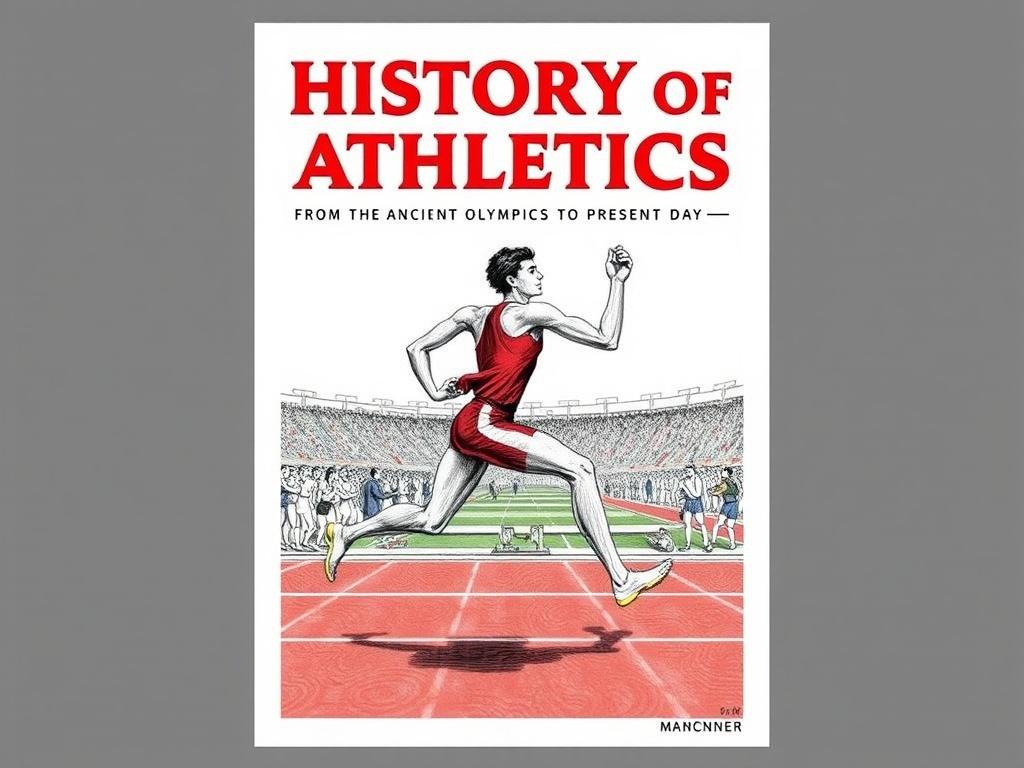
This exploration follows История лёгкой атлетики: от античных Олимпиад до наших дней, tracing how a handful of early rituals evolved into a worldwide sport beloved for speed, rhythm, precision, and endurance. It is a story of bodies pushed to their limits, of rules that tighten and loosen, and of communities that rally around a shared pursuit of human potential. The arc is winding, sometimes messy, but endlessly inspiring.
Ancient roots: athletics in the ancient Olympics and beyond
Athletic competition began not as a commercial spectacle but as a civic ritual. In ancient Greece, the Olympics were a convergence of priests, citizens, and athletes, where prestige, honor, and city pride hung in the balance. The events were compact yet demanding: sprinting in the stade, longer races, the javelin and discus throws, the long jump, and a pentathlon that mixed running with throwing and jumping. If you squint through time, you can see the seeds of a modern sport in those competitions—the idea that the body, trained and tested, could tell a story of a community’s values.
The athletes trained with purpose, often under the watch of mentors who emphasized balance, technique, and endurance. Equipment was simple—a pair of weights for strength, a javelin carved from local timber, a track marked by the trodden earth of an arena. Yet the spirit was advanced: training fed the drive to measure something crucial about the human being—the speed of the legs, the reach of the arm, the flight of the body, the edge of courage under pressure. The ancient stage was intimate, but its lessons echoed forward across centuries.
Beyond Greece, other civilizations held contests that resembled our sport in fundamentals: running, jumping, throwing, and feats of stamina honored by their communities. The story that follows is not a straight line from then to now but a long thread—one that picks up, unravels, and reweaves itself in surprising ways as societies reorganize, redefine, and reimagine competition for new generations.
From antiquity to the medieval world: passing down the idea of competition
As the Roman era arrived and faded, organized athleticism receded in some places and transformed in others. The moment wasn’t a single collapse but an ongoing negotiation between communal festival, military training, and personal prowess. The idea of tracking, measuring, and trying again persisted in informal settings—village fairs, schoolyards, and military drills. In these forms, the core concepts of track and field—speed, distance, power, coordination—continued to exist, even when the formal apparatus of the Olympics disappeared from sight.
Across Europe and the Islamic world, societies preserved and adapted elements of track and field within broader athletic and military cultures. The rhythm of competition shifted—from highly ritualized Olympic platforms to more practical demonstrations of skill that improved a city’s morale, its militia’s readiness, or its schools’ prestige. Yet the drive to test one’s limits, to compare skill across individuals and communities, remained a shared human impulse that would later be rekindled with modern energy and organization.
Traveling through time, we witness not a void but a quiet accumulation—a collection of clubs, coaches, and informal rules that would eventually crystallize into the modern sport. The path is uneven, but at its core lies a single truth: competition, in its most elemental form, translates a culture’s values into a shared language of effort, technique, and resilience. That language would be retranslated again and again as civilizations met the demands of a changing world.
The 19th century awakening: clubs, rules, and the revival of organized athletics
The 1800s brought a deliberate return to public competition, pushed by urban vitality, school curricula, and a growing belief in the educational power of sport. Athletic clubs appeared in cities across Britain and the United States, offering structure, coaching, and a forum where amateurs could measure themselves against peers. These clubs were more than social clubs; they became laboratories where rules could be tested, records kept, and communities built around shared training and competition.
Rulebooks proliferated, but the spirit was consistent: fairness, safety, and a clear standard by which performances could be judged. Jumping boards, running lanes, measuring tapes, and timing devices—these tools turned raw effort into comparable results. The amateur ideal—competing for the love of sport, not for money—still guided discussions, even as athletes began to specialize and break into distinct disciplines within a broader umbrella of athletics.
In this milieu, training started to look like something you could study rather than improvise. Coaches began to analyze technique, cadence, and economy of motion. Athletes learned how to structure repeats, how to manage fatigue, and how to recover between sessions. The era didn’t just revive a tradition; it created a blueprint for turning spontaneous prowess into repeatable excellence, a blueprint that would become essential when the sport moved onto the world stage.
The birth of the modern Olympics and the formalization of events
When the modern Olympics opened in Athens in 1896, track and field stood at the center of the program. The revival paired the romance of ancient contest with the rigor of new international competition. In those early days, the emphasis was on speed, stamina, and the simple joy of competing against athletes from far provinces who shared a common love for measurable performance. The games codified boundaries—distance, time, and measurement—so that records could be compared across nations and generations.
As participation grew, so did the breadth and depth of events. The field expanded to embrace a wider array of running distances, throws, and jumps, each with its own demands and techniques. The Olympics became a magnet, drawing athletes from diverse backgrounds into a shared ecosystem of coaching, infrastructure, and peer comparison. It wasn’t a sudden revolution but a steady intensification of standards and expectations that would, over time, shape an international sport with a true sense of belonging and purpose.
The momentum accelerated with national associations, cross-country meets, and the emergence of elite training centers. Coaches began to adopt periodization—planning training cycles to peak for major events—while athletes learned to balance intensity with recovery. The sport’s character matured: it was no longer merely about natural talent; it was about applying method, discipline, and strategic thinking to every race, throw, and jump. And as audiences grew, so did the sport’s cultural footprint, extending beyond the stadium into schools, clubs, and households around the globe.
Governance, records, and the standardization era
The early 20th century brought a more formalized governance structure. National federations emerged, and international bodies began to coordinate rules, eligibility, and officiating standards. With greater governance came a shared language across continents: consistent track sizes, standardized measurement practices for jumps and throws, and uniform timing systems. The goal was clarity—so that a world record, a national mark, or a meet record could be trusted across borders and decades.
In this era, the sport’s storytelling turned toward the record book. Athletes chased faster times, longer distances, and greater heights with a blend of natural gifts and hard-won technique. The record tables became living narratives: every new mark carried the promise of progress, every setback a reminder of the sport’s demanding nature. Coaches, statisticians, and spectators all contributed to a culture where progress was something that could be measured and celebrated by communities around the world.
To support this ecosystem, organizers introduced official competitions, standardized equipment, and fair officiating. A small but potent trend emerged: accuracy in measurement mattered as much as speed or strength. Wind readings for sprints and jumps, for instance, became essential details that could elevate or disqualify performances. The culture of fair play strengthened the sport, enabling a global chorus of athletes to compare their efforts against a shared, trustworthy benchmark.
| Era | Key development |
|---|---|
| Ancient world | Ritualized events that tested speed, strength, and technique; early forms of the pentathlon |
| 19th century | Club culture, codified rules, and organized national championships |
| Early 20th century | International governance, standardized events, and formal world competitions |
Women in track and field: barriers, breakthroughs, and expanding horizons
Opportunities for women to compete in track and field grew slowly but decisively. Early 20th-century societies often restricted athletic participation, yet the spirit of competition persisted in schools, clubs, and visible public events. The fight for inclusion wasn’t abrupt; it was a long campaign built on momentum from athletes, educators, and reformers who argued that women’s participation benefited health, character, and civic life.
The late 1920s marked a turning point when women began to appear in more Olympic events, signaling a broader shift across continents. Over the ensuing decades, barriers fell in education, in national programs, and in professional circuits. The shift was not instant, but it reshaped what a track and field athlete could aspire to be: not just a participant in a male-dominated arena but a leading figure in global sport with a platform to influence society.
Today’s landscape—where women compete across sprints, middle-distance, hurdles, jumps, and throws at the world’s biggest stages—is the fruit of decades of persistent work. The sport benefits from a diverse slate of champions who push the boundaries of speed, technique, and endurance, inspiring new generations to pursue excellence. It’s a reminder that fairness and opportunity grow strongest when access to training, facilities, and coaching is broad and well supported.
Science, training, and the athlete as a data-driven performer
Track and field has long benefited from curiosity about how the human body works. In the late 20th century, science entered the locker room in earnest: biomechanics, nutrition, psychology, and data analytics began shaping training plans. Coaches started to tailor programs to an individual’s physiology, optimizing everything from stride length to recovery modalities. The athlete stopped being a lone figure and became a member of a multidisciplinary team with a shared mission: to maximize potential while reducing injury risk.
Periodization—the art of planning cycles around peak performances—gained popularity as a practical framework for training. Athletes learned to balance high-intensity work with strategic rest, a concept that allowed for longer, more durable careers. Technology followed, delivering better race analysis, more precise wind and altitude data, and faster, more reliable timing systems. The result was a sport that could measure progress not only in seconds and meters but in the quality of technique and decision-making under pressure.
As data collection expanded, coaches adopted new approaches to talent identification and development. Early scouting gave way to comprehensive programs that tracked growth, movement patterns, and efficiency on the track or in the field. The blend of tradition and science kept the sport rooted in physical feeling—how a foot plants, how a hip opens, how breath coordinates with stride—while expanding the toolkit for unlocking human potential.
Globalization and diversity: track and field around the world
One of the sport’s richest themes is its ability to travel. Communities from every corner of the globe joined the ranks of track and field athletes, exchanging ideas about technique, coaching, and training culture. You can point to sprint dynasties in the Caribbean, endurance traditions in East Africa, and explosive field events in Europe and North America, all as chapters in a shared worldwide narrative. The sport grew not just by import of athletes but by the import of ideas—how to sprint, how to jump, how to throw, and how to train for longevity.
The globalization of competition also injected the sport with new commercial energy. Endorsed athletes, sponsorships, and televised meets created a feedback loop: higher stakes driving higher performance, which in turn drew larger audiences and deeper investment in facilities, youth programs, and coaching education. The result is a sport that feels local in its community roots yet universal in its allure, inviting fans to celebrate human achievement across cultures and languages.
As the world grew more connected, accessibility improved as well. Lightweight shoes, safer tracks, and better medical support extended athletes’ careers and encouraged inclusive participation at clubs, schools, and national teams. The sport’s democratization allowed extraordinary talents from varied backgrounds to reach the highest stages, reshaping who the history books mention and why their contributions mattered for generations to come.
The professional era, media, and the modern spectacle
In recent decades, track and field has become a hybrid of global competition and mass entertainment. The best athletes now navigate a calendar of marquee meets—each one a showcase of speed, courage, and technique—while maintaining the discipline needed to stay consistent across a season. Sponsors, broadcast partners, and social media amplify performances, enabling athletes to build brands beyond their medals and records.
This professionalization brought new pressures and opportunities. Athletes balance sponsorship obligations with training demands, travel schedules with family life, and public scrutiny with personal privacy. Yet the upside is clear: better training facilities, access to world-class coaching, and a platform to influence youth, all of which help sustain a robust ecosystem for generations to come.
As audiences grow, so does the responsibility to steward fairness. Governing bodies strengthen anti-doping programs, officiating integrity, and the transparency of results. The sport’s ethical backbone remains essential to maintain trust with fans who invest passion and money in the dream that a single race can change a life. In this sense, the modern era is as much about character as it is about speed or distance.
Cultural impact and lasting legacies
Track and field has always reflected broader social currents. Sporting legends become national symbols, youth programs become springboards for education and opportunity, and the stories of perseverance resonate with communities facing their own tests. The sport’s ability to distill complex human narratives into a clean, understandable measure—the time on the clock, the distance on the board—helps people connect across ages and borders.
Rivalries have formed part of the sport’s emotional fabric. Whether it’s sprint battles that unfold on the final meters of a race or the drama of a long chase in distance events, these stories invite spectators to imagine themselves in the arena. The ritual of competition—lines drawn, scores set, records chased—creates a rhythm that fans recognize instinctively, a rhythm that travels far beyond the stadium walls.
But beyond the headlines, the sport’s quiet achievements matter too. Infrastructure improvements in under-resourced areas, community coaching programs, and youth leagues translate athletic potential into real opportunities. The ripple effects extend into education, health, and civic life, reminding us that the history of track and field is as much about people as it is about medals and marks.
Looking ahead: technology, fairness, and the next chapter
As we look forward, a handful of forces seem poised to shape the next wave of track and field. Advances in materials science will continue to refine track surfaces and footwear, potentially altering how athletes accelerate and recover. At the same time, wearable tech and real-time analytics will give athletes and coaches new ways to optimize training, detect early signs of fatigue, and tailor competition strategies to individual physiology.
Fairness remains a guiding principle. Doping control, anti-timing rules in races, and standardized equipment will continue to evolve, aiming to preserve integrity while allowing athletes to push boundaries. The sport’s leadership will need to balance innovation with accountability, ensuring that progress benefits all corners of the sport and that opportunities to compete are accessible around the world.
Finally, the human element—curiosity, resilience, and teamwork—will keep driving track and field forward. The stories of forgotten athletes who trained in modest facilities and the present-day champions who command global stages share a common thread: commitment to improvement, a willingness to learn, and a relentless pursuit of excellence. In that sense, the arc of this history remains open, inviting new chapters that honor the past while inviting fresh perspectives and fresh voices into the arena.
What began as ritual, measurements, and communal pride has become a universal language spoken through speed, distance, and precision. The lineage—from the earliest stadiums of antiquity to today’s high-tech arenas—speaks to a shared human impulse: to test what the body can do, to measure it honestly, and to celebrate the achievements that emerge when discipline meets possibility. The history of track and field is not merely a record of times and throws; it is a narrative about how communities discover themselves through competition, how individuals discover their limits, and how, together, we build a sport that can carry us forward in unexpected, exhilarating ways.